The community in Poltava has lived through some of the hardest months of the war. Casualties across the region have risen sharply, and our partners in Poltava have found themselves comforting an ever-growing number of grieving families.
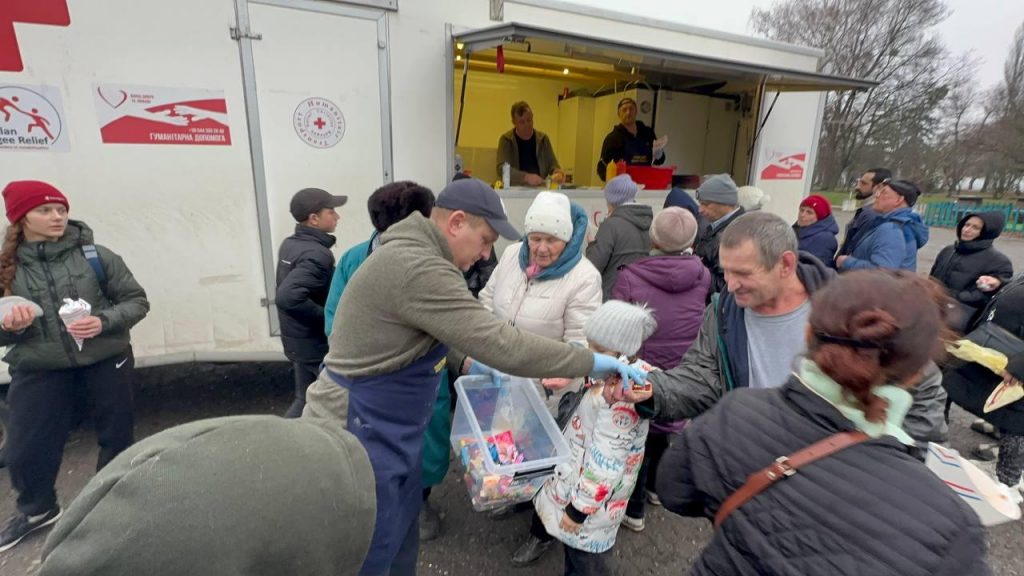
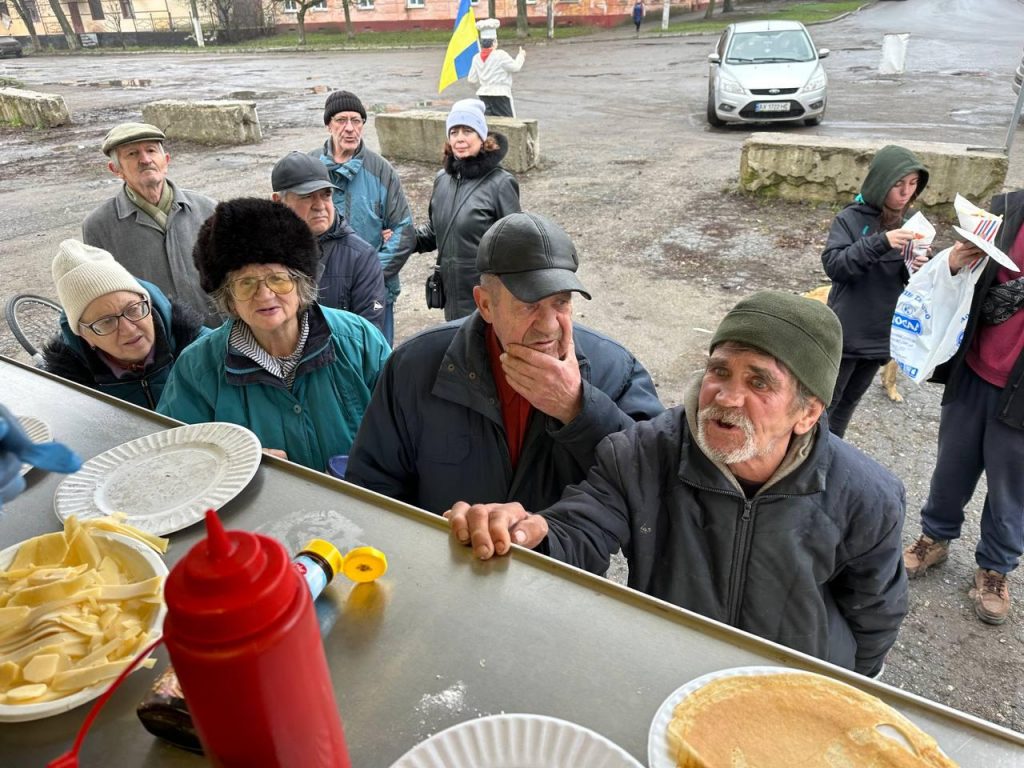
Team members set up mobile kitchens in Izium, Chuhuiv, Derhachi and Kharkiv, all places on the front line. They distributed over 3,000 portions of hot meals to people living under constant shelling. For some, it was just a bowl of soup, but for many it was also a reminder that they are not forgotten. Our partners continue to stand with those on the front line with support, warmth, and prayer.
When those who are able to, leave the frontlines, a local church in Poltava has become a lifeline to many since the war began. The church community must adapt rapidly, week by week, to whatever suffering arrives next on their doorstep. One of the most urgent needs is the creation of support groups for Ukrainian widows. The scale of loss within the community is devastating, and many women now face life alone, carrying both grief and the responsibility of rebuilding their families’ lives.
Many in Poltava carry trauma that words can barely contain. Tetiana is one of them. She shares:
‘One day, everything changed forever. Heavy shelling, shattered windows, panic… My husband went out of the basement with other men — and at that very moment the mortar fire began. When we ran outside, a terrifying scene unfolded before my eyes: our neighbours lying dead… and my husband holding his stomach, blood flowing through his fingers.
The soldiers provided first aid and gave us eight minutes to gather our things. Under continuous shelling, they took us to the hospital.
The next morning, I learned that my husband had died. That same day we were evacuated to Kharkiv, and later we moved to Poltava — with no belongings, no home, starting from nothing.
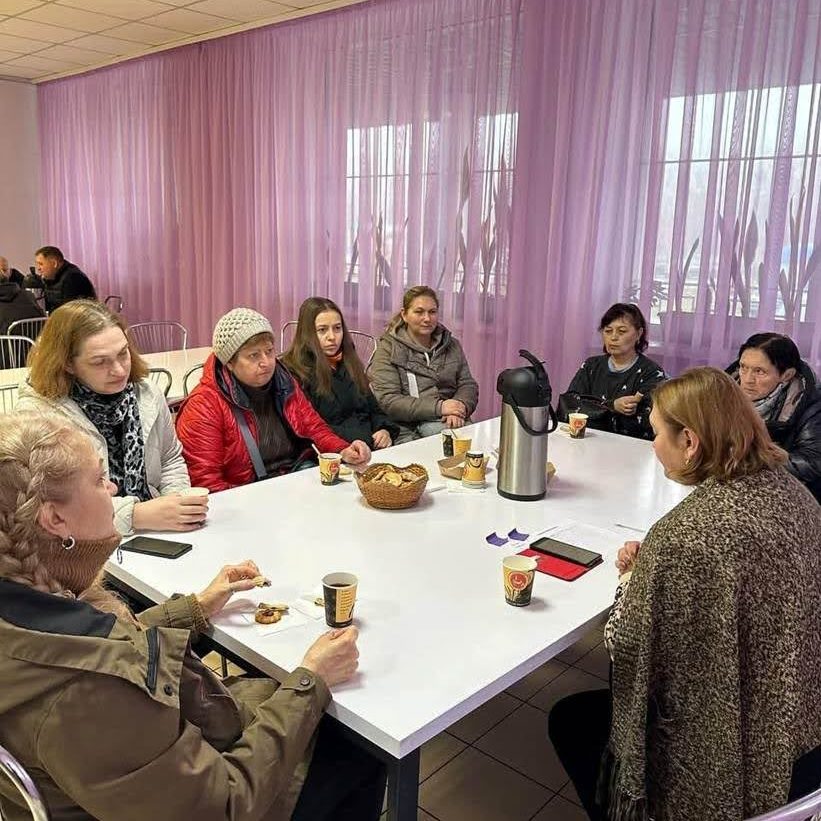
I reached out to a church for help. I was invited to meetings for internally displaced people, and received not only food, clothing, and medicine, but also the warmth, support, and fellowship my heart was longing for.
The coordinators were always sincere, kind, and attentive. These meetings became a true source of relief for me. We had lost our home, but here we felt that we had not lost people who cared.’
The photo below shows one of the support groups for internally displaced people held at the church.